

Choosing the location of your stand at a trade show is one of the key factors that will determine your success. It is not simply a matter of reserving a space at random, but of finding a strategic position that maximises your visibility, attracts qualified visitors and generates business opportunities. In this article, we take an in-depth look at the different aspects to consider when selecting the ideal location for your stand, and how to make the most of each factor to optimise your return on investment.
Why location matters
At a trade show or exhibition, your location determines how visible you are to visitors. A good location can significantly increase your traffic, while a poor one can leave you invisible, despite an excellent stand design and a well-crafted marketing strategy. It is therefore crucial to understand the dynamics of the event and anticipate where visitor flow will be heaviest.
Visitor traffic flow
The first thing to analyse is visitor traffic flow. At most trade shows there are hot spots, that is, areas where traffic is naturally denser. These typically include the main entrances, the intersections between major and minor aisles, and the areas close to popular attractions such as catering points, conference rooms or headline presentations. With the help of your exhibition stand builder, it is essential to visualise the natural path visitors take and to position your stand in these high-traffic zones.
Types of location: inline, corner or island?
Trade show organisers generally offer different types of locations, each with its own advantages and drawbacks.
- Inline stands sit along a single aisle and offer a front-facing view. They are often more affordable but limit visibility, as visitors can only see you from one direction.
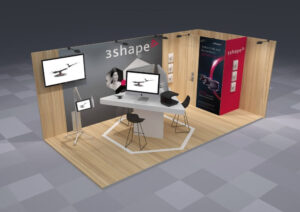
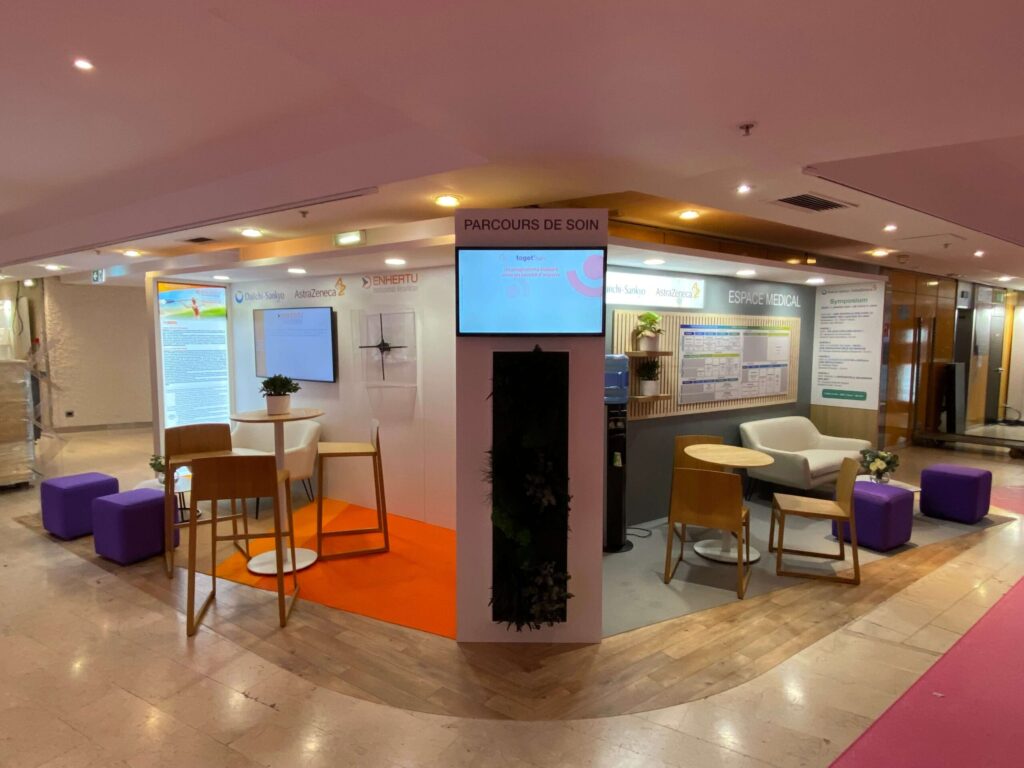
- Corner stands offer extra visibility with two open sides, which increases your chances of attracting visitors coming from several directions.
- Island stands, surrounded by aisles on all sides, are the most visible and offer maximum flexibility to create an open and welcoming space. However, they are also more expensive to book.
It is important to weigh up your budget and your needs before choosing the type of location that best suits your exhibiting strategy.
Identifying strategic zones
Proximity to major brands and competitors
Another element to consider is how close your stand is to major brands or industry-leading companies. Being located next to a major exhibitor can be a considerable advantage, as these companies generally draw large numbers of visitors. However, it can also be a challenge if your offering is too similar, as you risk being overshadowed.
It is also worth thinking about where your direct competitors are positioned. Being next to a competitor can work in your favour if you are trying to capture the attention of the same visitors, but it can also invite direct comparison.
Rest areas and essential services
Another factor that is often overlooked is proximity to rest areas, toilets and catering points. These places naturally attract traffic, which can increase your chances of interacting with visitors. However, be careful not to be too close to these zones, as they can also divert the attention of visitors who are more interested in taking a break than in a product demonstration.
The show entrances and exits
The main entrance is generally where visitors are most concentrated as they arrive. If you can secure a spot near this zone, it can guarantee you immediate visibility. The downside, however, is that visitors may be in too much of a hurry on their way in or out to stop at your stand straight away. A good compromise can be to choose a location close to the entrance, but not directly at it.
Optimising space and layout
Matching stand size and layout
Once you have chosen your location, the layout of your stand becomes a key factor in maximising the impact of that position. The size of the stand should match your objectives and budget, but also adapt to the dynamics of the show. A stand that is too small in a busy area can get lost in the crowd, while a stand that is too large in a quiet area risks being a poorly optimised investment.
Creating an attractive and accessible space
Whatever the location, your stand must be designed to catch the eye and encourage visitors to stop. Good design includes clear signage, colours consistent with your branding, and a layout that invites people in without making them feel crowded. Make sure the entry points are wide and visible from the main traffic routes. Use interactive or visual elements to capture attention from a distance.
Negotiating your location with the organisers
Why booking early matters
The golden rule for securing a good location is to book as early as possible. The best spots are generally allocated first, often several months before the event. If you exhibit at trade shows regularly, try to maintain good relationships with the organisers to gain priority access to strategic locations.
Negotiating costs and benefits
In some cases, it may be possible to negotiate with the organisers to obtain a better location or additional benefits. For example, if your company is planning a major promotional campaign around the show, the organisers may be willing to grant you a better location in exchange for increased visibility for the event. Be ready to discuss the options and to explain why a better location would benefit not only you, but the event as a whole.
Conclusion
Choosing the best exhibition stand location is a strategic decision that can have a direct impact on the success of your trade show participation. By taking into account visitor flow, proximity to major brands and service areas, and by optimising the use of your space, you can maximise your visibility and attract a relevant audience. Do not underestimate the importance of this step: a good location can make all the difference between a buzzing stand and a deserted one.